Membership Pricing Strategy: 11 Models and How Much to Charge

The best membership pricing strategy matches your price to the value members get and keeps the choice simple. In practice, that often means a few clear tiers, a yearly option priced at about ten monthly payments, and a free or low-cost entry point. Test your price points, raise prices in small steps, and use time-limited discounts to create urgency.
How did you come up with the current price for your membership? If the answer is a guess, or a copy of a competitor’s price, you are probably leaving money on the table or losing members you could keep.
This guide shows you how to work out how much to charge for a membership site, compares the main membership pricing models side by side, and covers the membership pricing strategies that help a price stick.
Why your membership pricing strategy matters
Your pricing model is tightly connected to how your membership site works and to the value it provides. If your content is the foundation of your membership business, pricing is what holds it together: it decides how you make money, which members you attract and how long they stay.
The relationship between price and value goes both ways. Price too low, and you attract bargain hunters who care about the price rather than the value, while you struggle to cover your costs. Price too high, and potential members look elsewhere. A strong membership pricing strategy balances what you need to earn, what your content is worth and what your audience can pay.
That balance does not happen overnight, but a clear method makes it much easier to find.
How much to charge for a membership site
There is no universal sweet spot for membership prices. The most reliable way to set yours is to combine three methods: a cost-based floor, a value-based ceiling and a competitor benchmark. Your price should sit where the three overlap.
Start with your cost per member
Your cost per member is the floor below which every new member loses you money. Start by listing what it costs to run the site each month:
- Domain and hosting
- Your WordPress membership plugin and other tools
- Payment processor fees
- Content creation, such as writing, editing, design and video
- Support and customer service
Add these up and divide the total by the number of members you have or expect. Say running the site costs $1,000 a month and you expect 200 members: your cost per member is $5 a month before any profit. Then set your revenue goal, meaning how much you need to earn to cover your costs, pay yourself and keep growing. Your price needs to sit well above the cost per member to reach it.
Use value-based pricing

Next, look at what your membership is worth to members. Is your content something they could find elsewhere? Do they need it to reach a goal? Knowing the value of what you offer helps you position your membership, estimate how many people are likely to join and spot content you should improve. This explainer on perceived value shows how buyers judge it.
Your target audience and their goals shape that value. If you offer one-on-one consulting that people cannot get anywhere else, you can charge more. If you sell an online course in a crowded niche, you may need a lower entry price or promotions, then upsell members to higher tiers later. Someone who joins a fitness membership as a hobby may not tie the price to a money goal, while a professional who wants a promotion is more willing to invest in a comprehensive program with proven results.
Ask who you are selling to, what they need and want, and what they are working toward. Then make sure each plan’s price matches the value it delivers, because that is what keeps members on board.
Benchmark against competitors

Then check what similar memberships in your niche charge, and how you can stand out. If comparable content costs less, you may need a promotion or extra value to win members over. If prices in your niche are high and your site is new, a lower launch price can help you attract your first members.
Use competitors as a reference, not as your price list. Your membership prices should not be a race to the bottom: the cheaper you sell, the less value people perceive, and you risk missing your revenue goal. And if you copy a competitor’s price without offering the same level of service, you will struggle to win new members.
Weigh the risk and test your price
Every price carries a risk. Set it too low, and even a full membership may not cover your costs. Set it too high, and too few people sign up. The way to reduce that risk is to test: try different price points with new sign-ups, measure conversions and cancellations over time, and ask members what they think, including when they cancel.
Once your site is live, keep an eye on the market and adjust your pricing when your costs, content or audience change.
Membership pricing models
Most sites build their membership pricing strategy on one of the following membership pricing models, or combine two or three of them. Here is how the 11 most common models compare:
| Pricing model | How it works | Best for | Watch out for |
|---|---|---|---|
| Freemium | A free plan with limited access; paid plans unlock the rest | New sites building an audience | Free members who never upgrade |
| Free or discounted trial | Full access for a limited time, then the regular price | Courses, content libraries, launches | Sign-ups who cancel when the trial ends |
| Tiered pricing | Several plans at different prices and access levels | Sites with varied audiences | Too many tiers confuse buyers |
| Recurring subscription | Members pay monthly or yearly for ongoing access | Communities, ongoing content and support | Churn when the value drops |
| One-time payment | A single payment for lifetime or long-term access | Fixed resources, such as a course or an archive | No repeat revenue from that member |
| Fixed-term membership | One payment for access over a set period, such as a year | Seasons, cohorts and annual programs | Getting members back after expiry |
| Installment payments | A set price split into a fixed number of payments | High-priced courses and programs | Missed payments |
| Joining fee with welcome offer | A sign-up fee that comes with an exclusive perk | Associations, clubs, partner-perk programs | The fee can put off hesitant buyers |
| Group and corporate pricing | One buyer pays for several seats | Teams, companies, schools and families | Lower revenue per seat |
| Add-on pricing | Extras sold on top of a base membership | Sites with premium extras, such as coaching | Extra content to create and maintain |
| Donation or pay what you want | Members choose how much to give | Nonprofits and creators with loyal fans | Unpredictable income |
Each model is explained below.
Freemium

Freemium suits new businesses that want to grow their audience and win market share. You offer a free sign-up with limited access, such as a stripped-down version of your content or some of the features, and charge for the full membership.
The freemium pricing model, like demos and free trials, lets potential members get to know your membership. It is a great way to get their attention, but it is not a revenue model on its own. Freemium will not magically move visitors up the funnel and turn them into paying members. If you do not do the rest of the job, even your free plan will not convert.
Balance matters. If the free plan is too thin, people leave before they see the value, and some go straight to a competitor. If it gives away too much, nobody needs to upgrade. Pair a quality paid plan with a free plan that shows what members are missing, and keep free members engaged with regular messages about what the paid plan includes.
Free or discounted trials
Trial-based pricing gives people access for a limited time, free or at a lower price. When the trial ends, they move to the regular price, which can be recurring or one-time. Trials work well for digital content such as online courses and content libraries, for special campaigns, and for new sites that need reviews and social proof.
Trials help people trust you before they commit, but some sign up only for the free period, so it is hard to predict how many will stay. You still need marketing to bring people to the trial in the first place. In Ultimate Membership Pro, any Membership can have a free or lower-priced trial that runs for a set number of days or billing cycles.
Tiered pricing
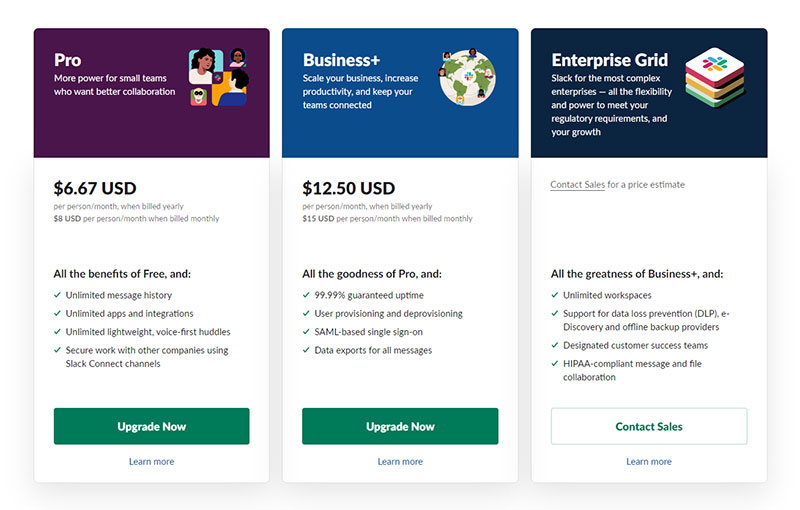
Tiered pricing offers several plans, each with a different package of benefits at a different price, and visitors choose the one that fits them. It is one of the most structured membership pricing strategies for growing revenue, because members can start small and upgrade later.
This is often called the good-better-best pricing model. The idea is to give people choices instead of an all-or-nothing decision. Group benefits in a logical way, so each tier speaks to a clear type of member, and give each tier a name that explains it; these membership level names can help.
Price each tier with care. The entry plan needs to be affordable but useful, so people are not discouraged from joining, and a free tier can play this role. If you are unsure how many levels you need, read more about tiered levels on membership sites.
Recurring subscription: monthly vs yearly
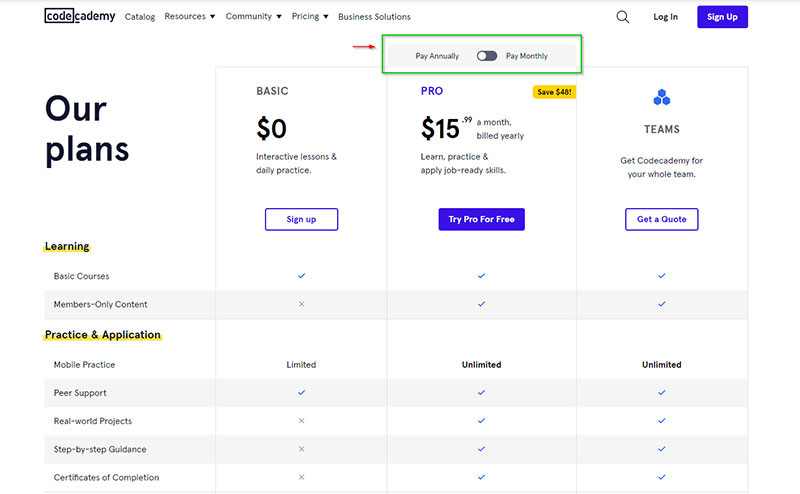
A recurring subscription charges members a set fee every month or year for ongoing access. It is the most common membership pricing model and works best for sites that keep adding content, such as online magazines, communities, courses and training sites. Recurring payments give you a steady, predictable income and make it easy to track the growth of your member base. The job is not done after sign-up, though: you have to keep members happy and engaged so that they keep paying.
The biggest question is whether to charge monthly or yearly. Why not offer both? Everyone wants a choice, and your members are no exception. A common approach is to price the yearly plan at about 10 monthly payments instead of 12. The saving makes the yearly plan attractive and rewards a longer commitment.
Some members cannot afford a yearly payment, and others simply prefer not to commit. Keep an attractive monthly plan for them. For more on billing schedules, see this guide to recurring charges for membership sites.
One-time payment and lifetime access
With a one-time payment, members pay once for lifetime or long-term access. It suits unique, in-depth resources that do not change much, such as an online course, an ebook bundle, a product bundle or a content library.
A single fee makes entry easier, because members do not have to commit to recurring payments, and it can encourage people to buy right away. On the other hand, you earn no repeat revenue from that member, and some people hesitate to pay a large sum before they know how valuable the content is. Upsells and add-ons help keep revenue coming in.
You do not have to pick one model for the whole site. With Ultimate Membership Pro, you can charge once for lifetime access, a fixed period or a set date range, or bill on a recurring schedule, separately for each Membership.
Fixed-term membership
Fixed-term pricing is similar to a subscription, with one key difference: members pay for access over a set period, often a year, and access ends when the period is over unless they renew. It suits programs with a natural end date, such as seasons, cohorts, annual events or exclusive limited-time offers.
A fixed term gives people a clear reason to join now, and you can offer a better rate for longer terms. The challenge is getting members to come back when their term expires, so plan renewal reminders and a reason to stay before the term ends.
Installment payments
Installment payments let members pay a set price in a series of smaller payments. They suit expensive courses and programs that many people could not afford in one go. For example, you might split the price of a course into three monthly payments.
Installments make it easier for members to budget and can bring in buyers who would not pay the full amount upfront. The risk is that some members miss payments, so your income is less predictable. Ultimate Membership Pro supports installment plans that stop billing after the last payment.
Joining fee with a welcome offer
A joining fee is a one-time sign-up fee, common for associations and clubs. To make it easier to accept, pair it with a welcome offer: exclusive content, a starter kit, or discounts for business members that are not available to the wider public. A digital membership card is a simple way to deliver partner perks to new members.
Some organizations also ask members to commit to a minimum period in return for the welcome offer. Try this model when a free trial does not show the value of your membership well enough, since the welcome offer does the convincing without a big marketing budget.
Group and corporate pricing
Group pricing lets one buyer pay for several people, such as a company team, a school class or a family. You usually offer a lower price per seat for larger groups, which makes it easier for organizations to buy for everyone at once. The trade-off is lower revenue per seat and less insight into each individual member.
In Ultimate Membership Pro, group memberships let one person pay for a Membership, invite the group by email and manage who is in, and you decide how many seats each Membership includes. Group accounts come with the Full Package and Agency plans. For B2B offers, read this guide on how to price a corporate membership site.
Add-on pricing
Add-on pricing sells extra content or services on top of a base membership. For example, a cooking membership could sell recipe ebooks, one-on-one coaching or kitchen tools as extras. Members customize what they buy, and you earn more from your most engaged members.
The downside is the work: add-ons take time to create and maintain, and revenue from them can be harder to track.
Donation or pay what you want
Donation-based pricing lets members choose how much to give. It is most common for nonprofits and causes, but creators use it too, asking fans to contribute what they want as a thank-you for free content.
It does not feel like you are forcing anyone to pay, but income is hard to predict, and you need a strong reason for people to give. Many sites combine it with a paid tier that offers extra perks.
Tips for a successful membership pricing strategy
Once you have a price and a model, these tactics help your membership pricing strategy hold up over time.
Raise prices in small steps
Whatever you sell, avoid price shocks. Raise prices by a small percentage at a time, so members are not frustrated.
Members push back against big jumps, but they are far more likely to accept small, occasional increases, especially when you explain what is new. Give existing members advance notice and, if you can, keep their current rate for a while as a thank-you.
Add a VIP tier
Make your pricing more attractive by adding a VIP tier on top of your regular plans. Members who want more can get special status, early access or entry to exclusive events. Keep VIP members engaged with special gifts and discounts.
Limited availability adds to the appeal. With the Full Package plan of Ultimate Membership Pro, for example, you can cap how many people can join a Membership, and a spot opens again when someone cancels.
Use time-limited discounts to create urgency
Early-bird specials and launch offers work especially well for event and training organizers. Make it clear that the offer is limited, and encourage people to act quickly.
Only offer discounts when you get something in return. A discount with a deadline can bring in many members at once, for the same offer and the same effort on your side. It also taps into people’s wish to get a smart deal and be part of something exclusive. Use these offers sparingly, so your regular price keeps its value. Ultimate Membership Pro, for example, lets you create flat or percentage coupons that run for a set period.
Anchor your price with comparative pricing
A smart way to anchor prices is to compare your membership fee to familiar day-to-day purchases.
You have probably seen something like this: how much do you spend on a cup of coffee each day? Invest the same amount in this membership and get much more in return.
Comparisons like this work because people need to relate your membership price to something they already know.
Keep friction low and help members decide
Members should have a choice and be able to pick a plan that works for them. Your job is to make that choice easy, not confusing.
Keep it simple, so people do not experience decision fatigue. Offer only the options you need, with familiar names such as Basic, Pro and Premium. Confusing or custom plans add friction and push people toward your competitors.
This is known as the paradox of choice: when people face too many options, they often put off the decision altogether.
Conclusion
A membership pricing strategy that works starts with numbers you can defend. Work out your cost per member, price to the value members get, and use competitors as a benchmark rather than a template. Then choose the membership pricing models that fit your content, whether that is a recurring subscription, a one-time payment, tiers, trials or group pricing, and combine them where it makes sense.
Test your price points, raise prices in small steps and keep your plans simple. Most of all, keep pricing in line with the value you provide. That way, you will not only grow your member base but also retain the members you already have. For more ways to grow income, see these tips to maximize membership revenue.
Frequently asked questions
How much should you charge for a membership?
Base your price on the value members get, what similar memberships in your niche charge and what your audience can afford, and make sure it sits well above your cost per member. Start with a price you can defend, then test higher and lower points with new sign-ups. Watch conversions and cancellations together, since a low price that members cancel quickly can earn less than a fair price they keep paying.
What is cost per member and how do you calculate it?
Cost per member is what it costs you to serve one member for a period, usually a month. Add up your running costs, such as hosting, your membership plugin, payment fees, content and support, then divide the total by your number of members. Your price needs to sit above that figure, with enough margin left for profit and growth.
Should you offer a discount for annual memberships?
Yes, an annual discount gives members a reason to commit and gives you cash up front. A common approach is to price the yearly plan at about ten monthly payments, which works out to two months free. Show the savings clearly next to the monthly price so the value is easy to see.
Are recurring payments better than one-time fees for memberships?
Recurring payments give you predictable income and suit memberships with ongoing content, community or support. One-time fees suit fixed resources, such as a single course or a downloadable library. Many sites offer both. Ultimate Membership Pro, for example, lets you sell Memberships as one-time payments or recurring subscriptions.
How should you raise membership prices without losing members?
Raise prices in small steps, and only after you add value members can see, such as new content or perks. Give existing members advance notice, and consider keeping their current rate for a while as a thank-you. Test a higher price on new sign-ups first, then roll it out to everyone.
Ready when you are
Turn visitors into paying members with Ultimate Membership Pro
Launch your membership website, protect exclusive content and automate subscription payments, all in one WordPress plugin.
- 14-day money-back guarantee
- Unlimited members
If you enjoyed reading this article about membership pricing strategy, you should read these as well: